
Giovanni Francesco Albani
Giovanni Francesco Albani
Breve by Future Pope Clement XI to Pope Alexander VIII - 1690
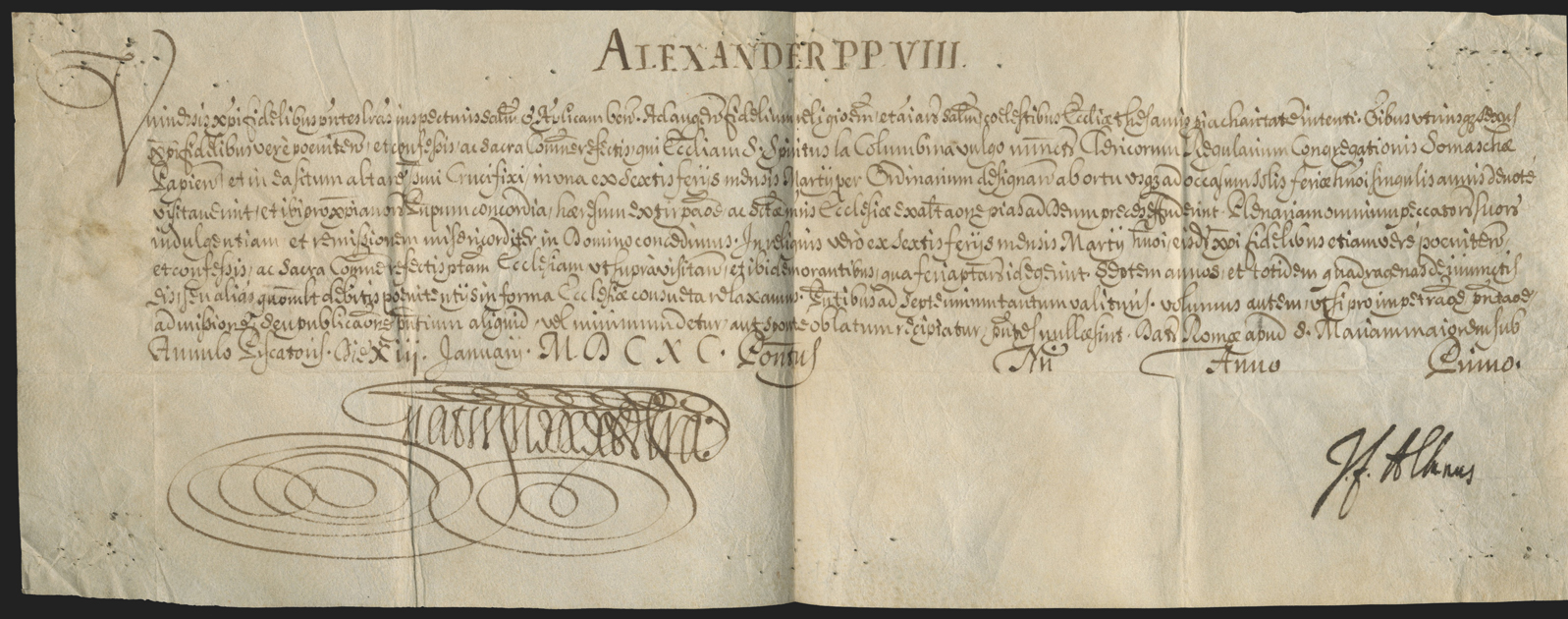
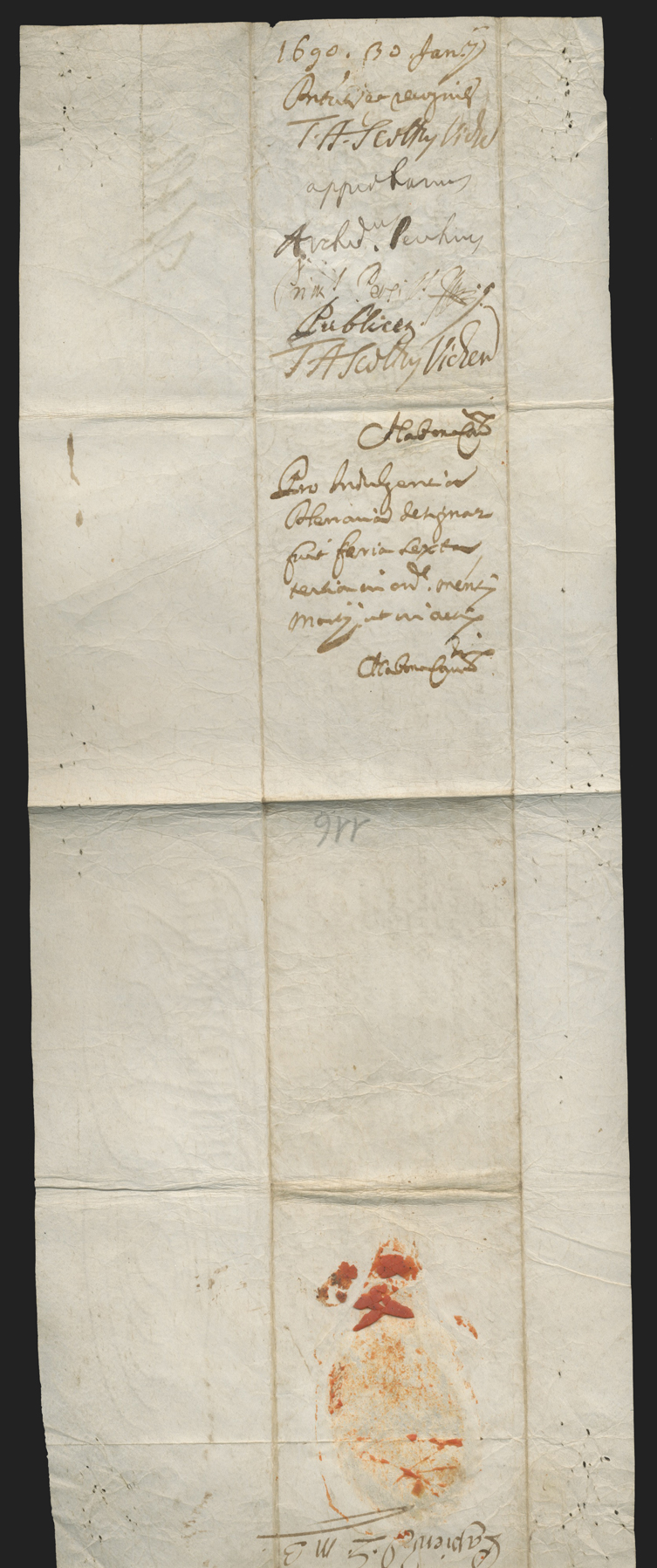
Vellum breve dated 30 January 1690 signed by Cardinal Giovanni Francesco Albani (“G.F. Albanus,” the future Pope Clement XI, on lower right of recto), as cardinal secretary of state during the papacy of Pope Alexander VIII. Particularly rare in light of Alexander’s very short tenure—just 16 months, from October 1689 to his death in February 1691. In very fine condition, measuring 12″ x 5.” Summary translation:
Pope Alexander VIII grants a plenary indulgence of seven years to all the faithful of both sexes who are truly penitent, and having confessed and received communion, visit and pray in the Church of the Holy Spirit of Pavia (also known as La Colombina) of the Order of Regular Clerics of the Somascans on Good Friday in the month of March, anytime from sunrise to sunset.
Dated in Rome, at Saint Mary Major’s, January 13, 1690.
[Signed by] Cardinal Giovanni Francesco Albani
GIOVANNI FRANCESCO ALBANI (1649–1721)
Future Pope Clement XI
Papal Breve Issued Under Pope Alexander VIII and Signed by the Future Pope Clement XI
Rome, January 13, 1690
An exceptional document from the heart of the Vatican, this original papal breve was issued during the pontificate of Pope Alexander VIII and bears the signature of Giovanni Francesco Albani, the distinguished churchman who would later ascend to the Throne of St. Peter as Pope Clement XI (1700–1721).
The document is headed:
ALEXANDER PP. VIII
(Alexander Pope the Eighth)
and is dated:
XIII Januarii MDCXC
(January 13, 1690)
Written in Latin in an elegant papal chancery hand, the breve concerns the granting of spiritual privileges and indulgences associated with the Church of the Holy Spirit, commonly known as “La Columbina,” administered by the Somascan Fathers, formally the Congregation of Regular Canons of Somasca.
The text grants a Plenary Indulgence to the faithful who, after confession and reception of Holy Communion, visit the church on designated feast days and offer prayers according to the intentions of the Church. Such indulgences formed an important part of Catholic devotional life during the seventeenth century and were among the most significant spiritual privileges bestowed through papal authority.
Particularly noteworthy is the document’s association with the Somascan Order, founded by Saint Jerome Emiliani (Girolamo Emiliani) in the sixteenth century. The order became renowned throughout Italy for its work with orphans, abandoned children, the poor, and the education of youth. Papal recognition and privileges such as those contained in this breve played a crucial role in supporting the order’s religious and charitable mission.
The signature at lower right is that of Giovanni Francesco Albani, then a rising figure within the Roman Curia. Just ten years later, Albani would be elected pope and reign as Clement XI, one of the most influential pontiffs of the eighteenth century. His papacy witnessed the War of the Spanish Succession, major diplomatic conflicts between Rome and European monarchies, the expansion of Catholic missionary activity, and important theological controversies that shaped the future of the Church.
Documents connecting two papacies in this manner are especially desirable. This breve was issued under one pope, Alexander VIII, yet bears the signature of a future pope whose own reign would help define the next generation of Church history. Such associations provide a fascinating glimpse into the continuity of Vatican governance and the careers of the men who would eventually occupy the papal throne.
The document remains an attractive and highly displayable example of seventeenth-century Vatican administration, combining formal papal authority, ecclesiastical history, and the autograph of a future pope in a single artifact.
For collectors of papal history, Vatican documents, ecclesiastical manuscripts, and early modern European history, this is an especially compelling piece—an original papal instrument linking the brief reign of Alexander VIII with the future Clement XI, whose influence would extend across the Catholic world during the opening decades of the eighteenth century.
A rare and historically engaging Vatican document from the age of Baroque Rome, signed by a man destined to become one of the most important popes of the eighteenth century.
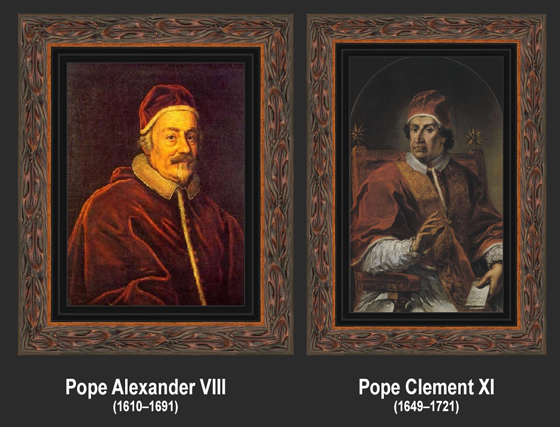
[Image for reference only; not included]